Los Angeles buildings live with several competing demands: long stretches of sun, occasional heavy rains, salty coastal air in parts of the city, strict seismic codes, and a market that prizes both curb appeal and energy performance. Choosing the right roof matters more than most property owners think. Lightweight metal roofing has emerged as a practical, stylish, and resilient answer for many LA structures. Eclipse Metal Roofing has developed a line of options that fit those specific demands, and understanding how the systems behave on real roofs helps you decide whether to replace an aging assembly or specify metal for a new build.
Why metals make sense here comes down to three concrete realities: weight, durability, and thermal performance. Compared to concrete tiles or clay, many metal systems weigh a fraction per square foot, which means lower dead load, simpler framing requirements, and fewer surprises when a structural engineer examines an older building. That lighter weight also translates to lower installation labor and fewer costly supports on retrofits. Durability matters because metal weathers differently than asphalt; a well-specified metal roof can last 40 years or more, resisting rot, insect damage, and the UV breakdown that kills organic shingles. Finally, reflective coatings and high emissivity finishes matter under an LA sun for lowering peak cooling loads.
What follows is a practical, experience-driven guide that covers the best lightweight metal systems for Los Angeles structures, how they behave in the field, and the trade-offs you need to weigh when hiring a Metal Roofing Contractor Los Angeles owners can trust.
A field perspective: what I see on LA roofs Walk any neighborhood with an eye for roofs and you see stories. In Echo Park, older bungalows have new standing seam metal over original sheathing, installed when owners converted the attic and wanted durable, lightweight coverage. Near the coast in San Pedro, aluminum panels that were properly factory-coated keep their color and resist pitting, while untreated steel shows early corrosion if installers skimped on edge flashings. On multifamily retrofits, I’ve seen stone-coated steel installed because it mimics tile but reduces weight to near one-fifth of actual clay. Those real-world outcomes come down to choices made at specification and workmanship during installation.
Common lightweight metal choices and what they offer Aluminum: low weight, excellent corrosion resistance, ideal for coastal exposure. Aluminum panels often weigh 0.9 to 1.5 pounds per square foot for common gauges used on roofs. They accept a wide variety of factory-applied Kynar or PVDF coatings that preserve color and reflectivity for decades. Aluminum is softer, so it dents more easily than steel, but for most residential and commercial roofs the trade-off favors aluminum when salt spray or chemical exposure is a concern.
Galvanized and galvalume steel: stronger, generally less expensive than aluminum, but susceptible to corrosion in coastal areas unless adequately protected. Galvalume has an aluminum-zinc alloy coating that improves corrosion resistance over plain galvanized steel and is widely used for standing seam profiles. Weights typically fall in the 1.5 to 2.5 pounds per square foot range depending on gauge. Steel tolerates higher wind loads and foot traffic, which makes it appealing for roof terraces and areas where maintenance access is frequent.
Stone-coated steel: thin steel panels stamped to resemble tile or shingles, then coated with stone granules. The weight advantage over actual clay or concrete tiles is dramatic, often 75 to 85 percent lighter than traditional tiles. Visual appeal is a strong pull for many homeowners and architects who want the tile aesthetic without the structural expense. Stone-coated steel is heavier than plain standing seam metal but still under 4 pounds per square foot in most profiles.
Copper and zinc: premium materials with long lifespans and aesthetic patina. Copper develops a patina that protects it from further corrosion. Zinc self-heals minor scratches and gains a matte grey patina over time. These metals are more costly and typically chosen for high-end residential or landmark projects where appearance matters as much as longevity. They are not the lightest options in absolute terms, but their longevity often justifies the upfront premium.
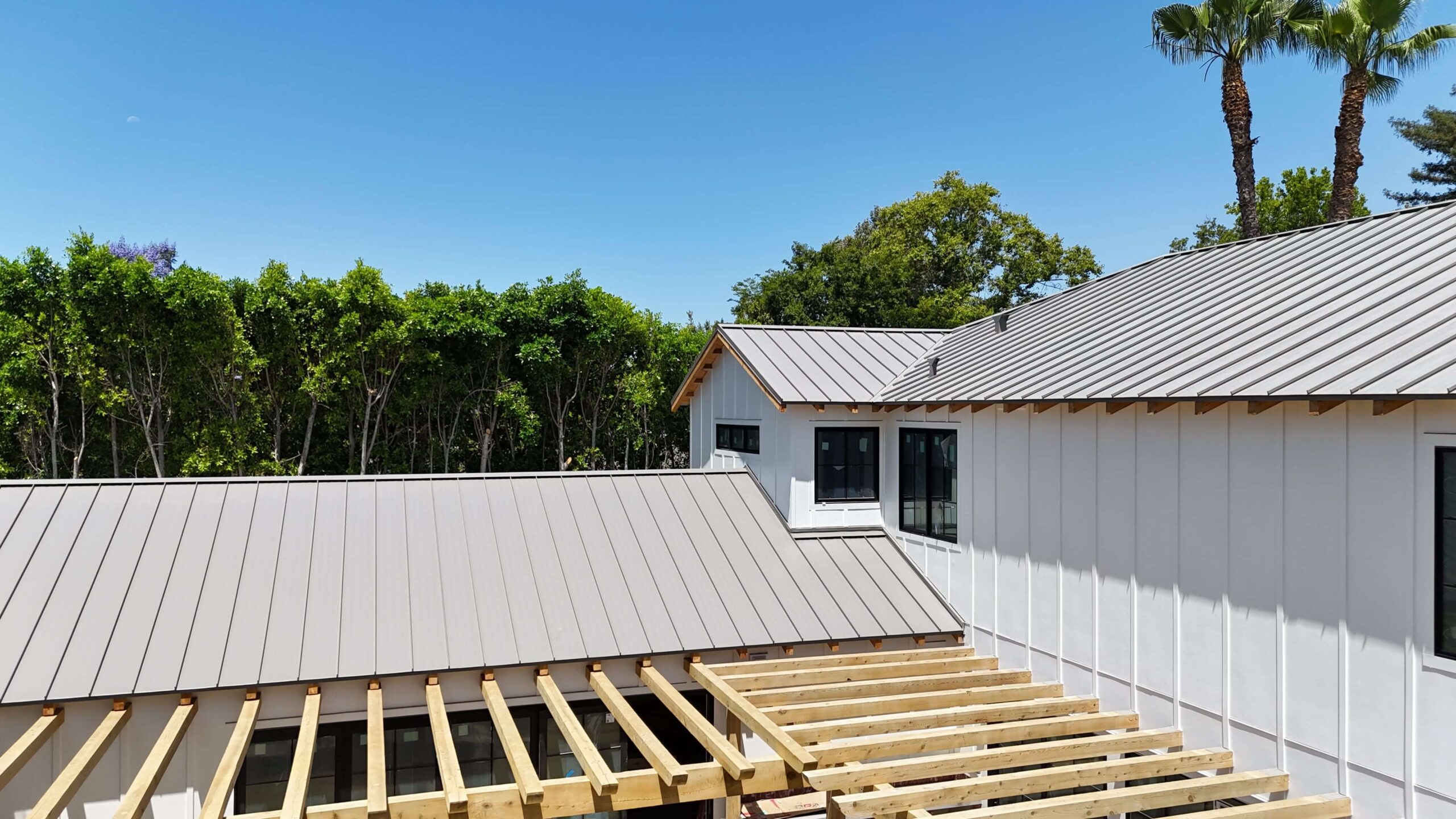
Profiles and systems that matter for LA roofs Standing seam: a go-to for modern, low-maintenance roofs. Vertical panels interlock at raised seams, creating a clean look and a weathertight joint. Standing seam works well on low to moderate slopes and excels at shedding water. For LA, where heavy seasonal rains are episodic rather than constant, standing seam’s superior seam performance and minimal penetrations reduce leak risk.
Interlocking shingles and tiles: available in metal versions that mimic asphalt or clay. These systems are often installed with battens or on continuous sheathing, giving an authentic profile. They’re a good choice when architectural guidelines require a specific appearance but the structure needs a lighter assembly.
Exposed fastener panels: budget-friendly and quick to install, these have screws that penetrate the metal into the substrate. They can perform well when properly installed with neoprene washers and careful detailing, but they create more potential leak points than concealed-fastener systems. For long-term projects where appearance and weathertightness matter, I would generally prefer a concealed-fastener system unless cost constraints dominate.
Attachment methods and seismic considerations Los Angeles structures sit on active faults, and roofs must resist uplift during both wind and seismic events. Lightweight metal roofs reduce inertial forces during earthquakes compared to heavy tile; that lower mass improves performance of the whole structure. However, attachment matters more than weight alone. Fastener spacing, panel clip design, and edge anchoring all determine whether the roof will hold through strong shaking or have panels that detach.
In practice, I insist on specifying tested clip systems for new standing seam installations and continuous straps at eaves, ridges, and gable ends. For retrofits over existing sheathing, the contractor should confirm substrate strength and add blocking where necessary. A Metal Roofing Contractor Los Angeles understands local code updates and will typically provide engineering when replacing an entire roof on a multifamily property.
Thermal performance and energy implications Reflective metal finishes and high emissivity coatings lower solar heat gain. Measured performance varies by color and finish, but energy models commonly show reductions in peak cooling loads by 10 to 25 percent when switching from dark asphalt shingles to a high-reflectance metal roof with adequate ventilation. Cool roof programs and Title 24 compliance sometimes reward these choices, and rebates can offset part of the investment.
Ventilation matters. Metal transmits heat quickly, so without a ventilated assembly, attic temperatures can spike. Proper ridge and soffit ventilation, combined with attic insulation, produces the best outcomes. For LA owners chasing energy savings, pairing a reflective metal roof with upgraded attic insulation often yields the best payback.
Durability, maintenance, and https://s3.us-east-1.wasabisys.com/metal-roofing-contractor-los-angeles/index.html lifecycle costs Expect a well-installed metal roof with proper coatings to last 30 to 60 years depending on material. Aluminum and zinc can approach the higher end; painted steel often sits in the middle when maintenance is thorough. Compared to asphalt shingles that commonly last 15 to 25 years in this climate, metal reduces replacement frequency and avoids disposal volumes.
Maintenance is straightforward: keep gutters clear, remove debris in valleys, and inspect flashings after big storms. If repairs are needed, small sections of many metal roofs can be replaced without a full re-roof, keeping lifecycle costs manageable.
Costs and payback in LA terms Budgeting for a metal roof varies with material, profile, and complexity of the roof. As a rough range you can expect installed costs to fall between approximately $7 and $20 per square foot for most lightweight metal options, with premium metals and complex architectural profiles toward the high end. That range depends on local labor rates, tear-off costs, substrate repairs, and unique details like skylights or parapet flashings.
When evaluating payback, consider longer service life, lower insurance premiums in some cases, lower maintenance, and energy savings. For many owners, the decision is not purely financial but also aesthetic and logistical. If the structure is old and needs seismic upgrades, the lighter roof reduces the required structural interventions and can offset part of the cost differential with heavy materials.
Common installation pitfalls I’ve seen and how to avoid them Panels that sit on wet or improperly prepared sheathing will trap moisture and accelerate corrosion, especially at cut edges. Ensure substrate is dry, free of rot, and sheathed with the correct materials. A good contractor will insist on replacing compromised sheathing rather than hiding it beneath new metal.
Fastening errors matter. Improper torque on exposed fasteners leads to leaks; over-driven screws strip the hole and under-driven screws leave the washer ineffective. Concealed fastener systems reduce this risk, but even concealed systems need careful clip spacing and fastener placement.
Edge details and flashings are where leaks often start. Flashings must be designed for movement, sealed appropriately, and terminated to drainage planes. Around chimneys, vents, and roof penetrations, use welded or mechanically secured flashings and proper counterflashing to avoid repetitive call-backs.
Selecting a contractor: what sets a good Metal Roofing Contractor Los Angeles apart Experience on local projects and a portfolio of completed LA installations is important, but the selection should hinge on specifics. A strong contractor provides references you can verify, details on the exact systems they install, and willingness to back their work with a clear warranty. They should bring engineered drawings for complex roofs and coordinate with your local building department where permit review requires additional documentation.
Ask whether the contractor provides a project-specific color sample and mock-up. Metal colors vary in finish and sheen. Seeing a sample on the roof at midday gives a clear sense of how it will look across the facade. A contractor that does not offer an on-roof mock-up is more likely to shortcut details.
Key questions to ask your contractor
Can you show completed projects in Los Angeles with similar materials and scope, and can you provide owner contact information for each? What are the exact material specifications, including gauge, coating type, and finish, and do you supply product data sheets? How will you attach panels at eaves, ridges, and gable ends to meet both wind and seismic requirements? What is covered by your workmanship warranty, how long does it last, and how do manufacturer warranties coordinate with your labor warranty?How Eclipse Metal Roofing fits LA needs Eclipse Metal Roofing systems target the balance between weight and performance. Their options include standing seam profiles and stone-coated products that reproduce classic California looks with modern materials. On coastal projects, their aluminum options with factory-applied PVDF finishes resist chalking and corrosion longer than standard painted steel. For historic or design-sensitive neighborhoods where tile profiles are required, Eclipse’s stone-coated steel can deliver the visual outcome with dramatically lower roof dead load.
Two real-world examples that show trade-offs A mid-century bungalow in Silver Lake required a full re-roof. The owner wanted the tile look without the structural retrofit cost. Specifying stone-coated steel saved roughly 50 percent of the structural reinforcement costs we would have needed for clay tiles. The upfront cost was higher than asphalt, but the building avoided heavier framing work and the owner gained an attractive, long-lived roof that matched neighborhood character.
A small multifamily near the port needed a replacement after rot was discovered in the sheathing. We moved to aluminum standing seam with a bright, reflective finish to improve energy performance. The lighter material allowed for a single-day crane lift for panels, and the contractor used tested clip systems to satisfy the engineer’s seismic attachment notes. The building now sits under a roof expected to perform reliably for 40 years with minimal maintenance, and tenants noticed lower attic temperatures after installation.
Permitting, codes, and HOA restrictions Los Angeles building codes evolve, and roof replacements often trigger compliance tasks beyond just the roof. For example, insulation upgrades and dryer vent routing can be required when a roof is replaced. HOA guidelines sometimes restrict metals by name or mandate certain profiles. Engage your contractor early to navigate local permit requirements, community covenants, and any historical review. A quality Metal Roofing Contractor Los Angeles will handle submittals and communicate code implications for choices such as solar-ready mounts or accessory installations.
Return on design: when to choose metal for aesthetic reasons Metal gives architects and designers a wide palette: crisp modern lines with standing seam, traditional clay aesthetics with stone-coated profiles, or high-end patina from copper and zinc. Choose metal if your priority is design longevity, color permanence, and a roof that retains appearance with minimal maintenance. If the property is part of a preservation district, propose metal systems that replicate the original look while displacing the heavy mass of historical materials.
Final judgments that matter on any bid Price is important, but the best outcome often comes from evaluating the bid’s detail. Does the quote list materials by manufacturer, gauge, finish, and profile? Does it include tear-off, substrate repair, flashing details, and permit fees? Are allowances for unforeseen sheathing repairs clear? The cheapest bid that omits these items will likely become the most expensive over time.
Find a contractor who communicates clearly about the trade-offs. If you live near the ocean, prioritize aluminum or heavily coated galvalume. If foot traffic on the roof will be frequent, favor thicker steel and robust walkways. If aesthetics are paramount, look at stone-coated or premium metals and insist on mock-ups so the finished look meets expectations.
Making the decision For Los Angeles structures that need lightweight, long-lived roofing, metal is often the rational choice. Eclipse Metal Roofing offers systems that fit the city’s climate and regulatory environment, but the final outcome depends on specification and installation quality. Get detailed material sheets, insist on a project-specific mock-up, verify references, and require a written warranty that coordinates manufacturer and labor coverage. With those boxes checked, you gain a roof that reduces structural load, performs in sun and salt, and holds its appearance for decades. If you want a recommendation, request bids from at least three qualified Metal Roofing Contractor Los Angeles firms, compare materials and details line by line, and prioritize workmanship and warranty above the lowest price.
Eclipse Metal Roofing
2140 Westwood Blvd Unit 209, Los Angeles, CA 90025
+1 (310) 490- 9695
[email protected]
Website: https://eclipsemetalroofing.com